
The Infertility Project
An Ongoing Museum-Scale Installation on Reproductive Trauma and Collective Witness
The Infertility Project is an ongoing, museum-ready installation that confronts involuntary childlessness as a form of existential trauma. Open and unfinished by design, the work examines how infertility fractures identity, disrupts time, and alters a woman’s relationship to body, future, and social belonging.
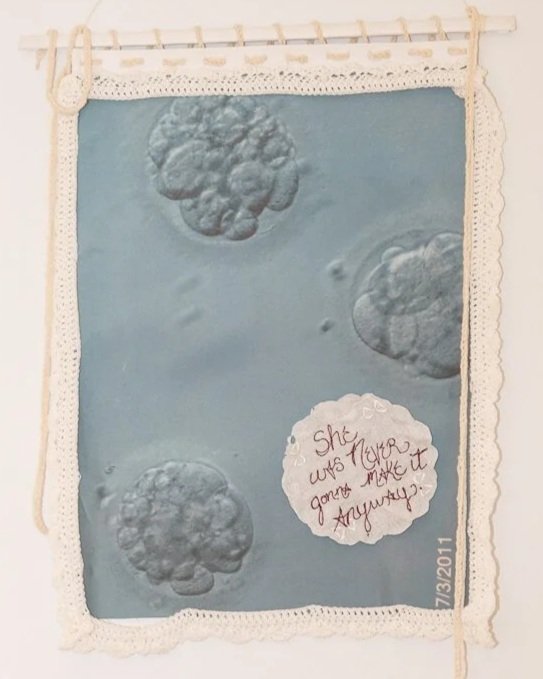
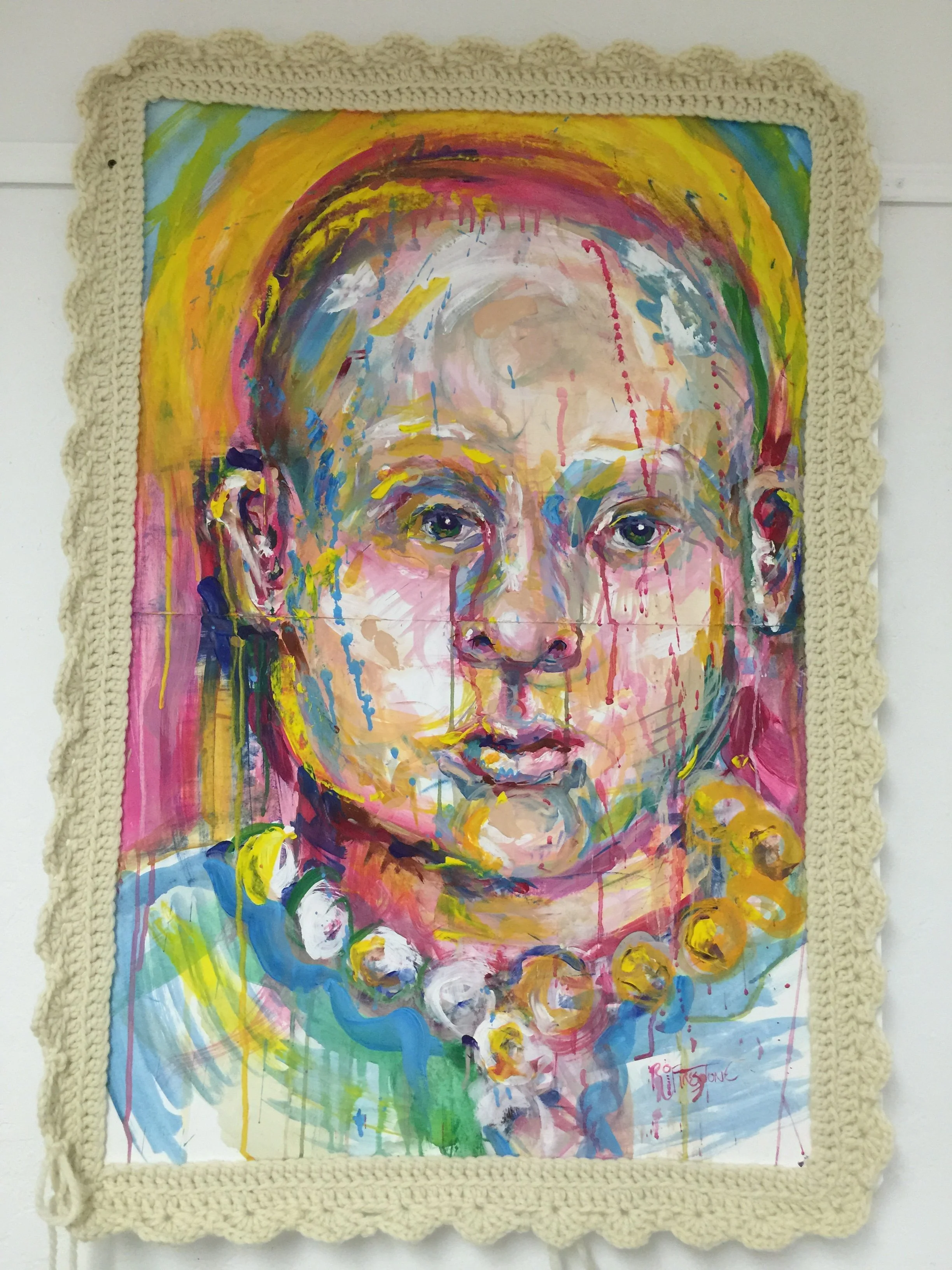
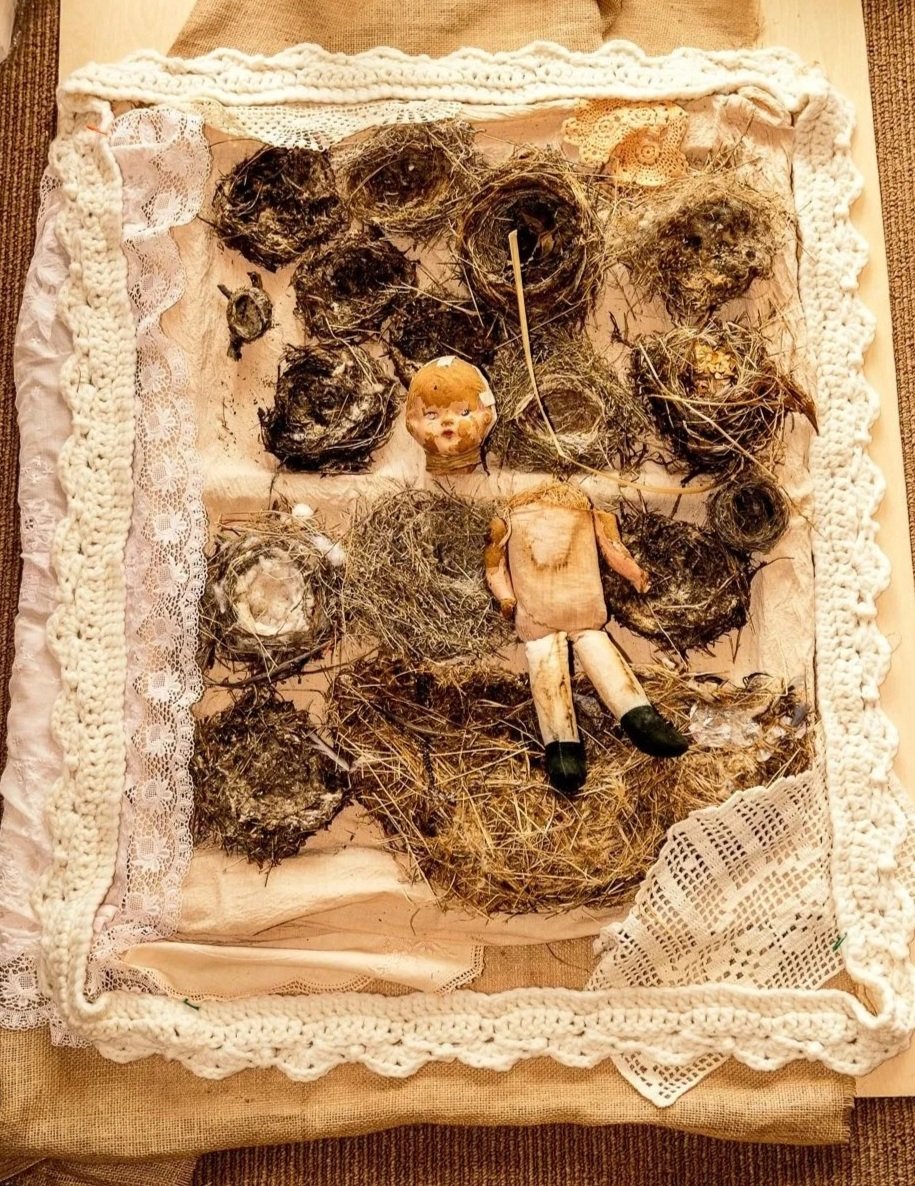
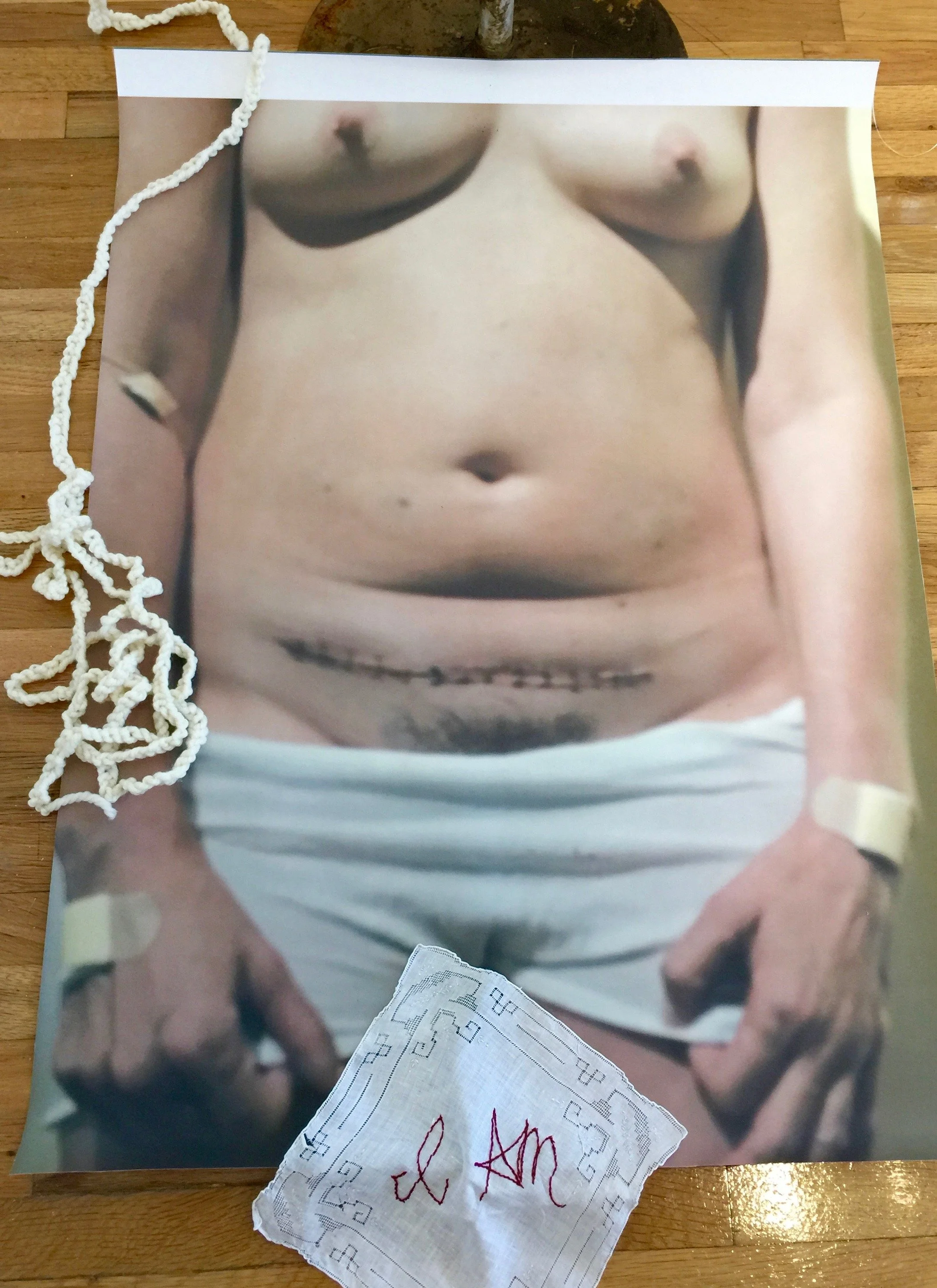
At its core is a series of 30 x 40 inch works referred to as “baby blankets.” Constructed through traditional women’s textile practices including embroidery, knitting, crochet, and quilting, these works are combined with pharmaceutical remnants from IVF treatment, medical gauze, hand-drawn elements, and industrial materials such as steel welders frames where scale and materiality reference care, labor, and grief, allowing the project to be presented in full or through curated groupings and series.
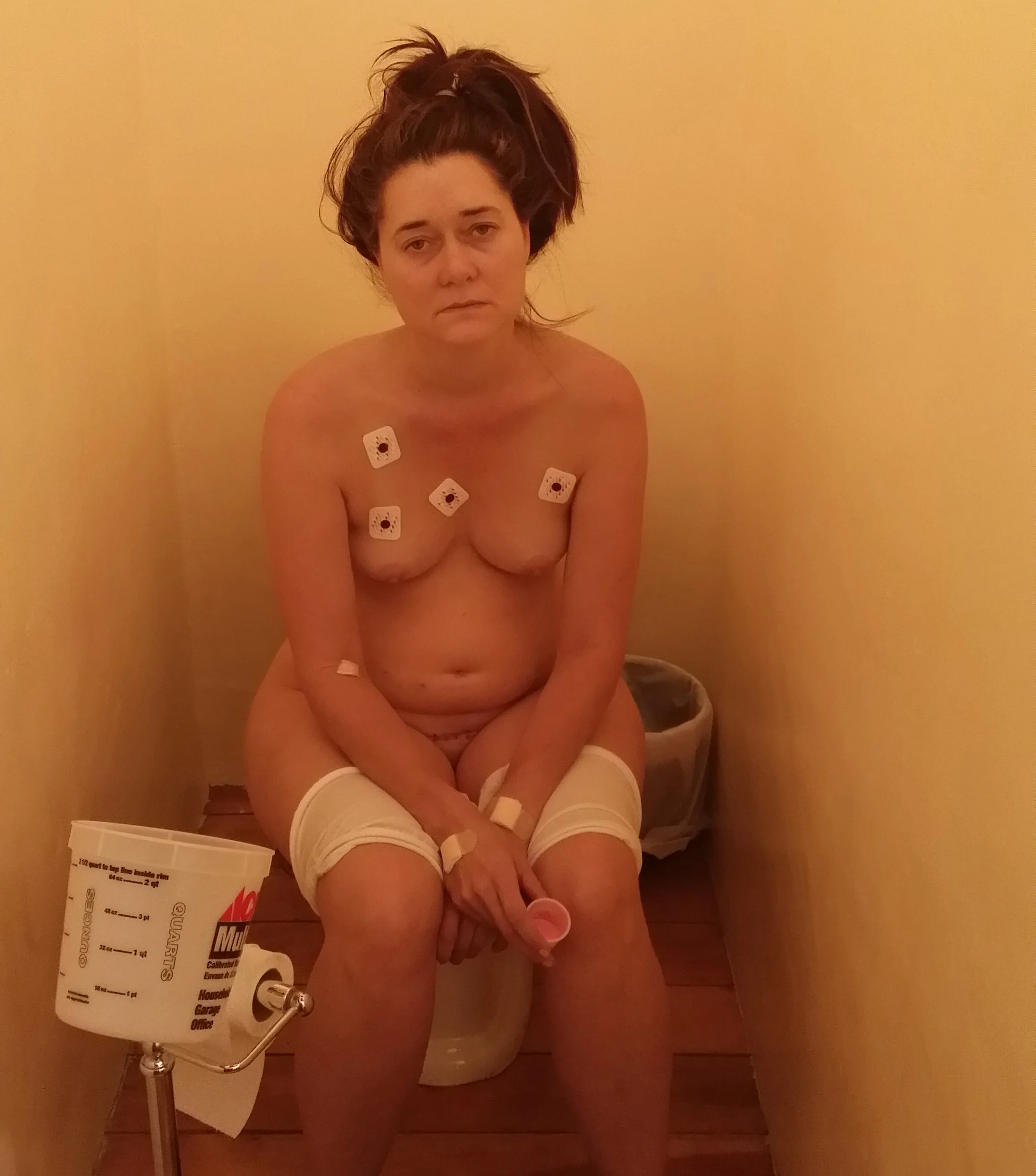
The work originates in the artist’s experience of infertility following in vitro fertilization, decades of endometriosis, and an emergency hysterectomy caused by unexpected complications during IVF treatment. Produced over seven years, the stitched works function as durational records of mourning and, over time, as a gesture toward healing. While rooted in a singular body and medical history, the project is intentionally structured to move beyond autobiography, transforming private loss into a public framework that honors the trauma shared by infertile women globally.
The installation addresses the enduring silence surrounding infertility and the cultural systems that sustain it. In Western contexts, infertility is often framed as personal failure. In other regions, women deemed infertile may face social exile, economic abandonment, or coercion into exploitative labor, including sex trafficking or prostitution, even when infertility is medically attributable to male partners. The work situates infertility within broader systems of gendered power, medical neglect, and reproductive expectation.
The project includes participatory works that invite audience members to contribute their own reflections on grief and loss. These contributions allow the work to grow through collective presence and transform the work into an accumulating archive of lived experience.
Within an art historical lineage, the project aligns with collective, grief-centered practices, most notably the AIDS Memorial Quilt. Like the Quilt, it uses repetition, handwork, and participation to insist on public visibility for loss that has been historically silenced, positioning the work as a living structure that expands through engagement.
The project has been presented at the United Nations Commission on the Status of Women and featured in Parade Magazine. It is accompanied by a documentary film, The Empty Womb, by internationally renowned filmmaker Betsy Chasse, now streaming on Amazon Prime.
The Infertility Project insists that infertility be recognized not as a private disappointment, but as a shared human trauma that belongs in public, institutional space.
Institutions are invited to engage the work as a site of encounter, participation, and cultural responsibility.
This Page is
a Work in Progress!
The Overview
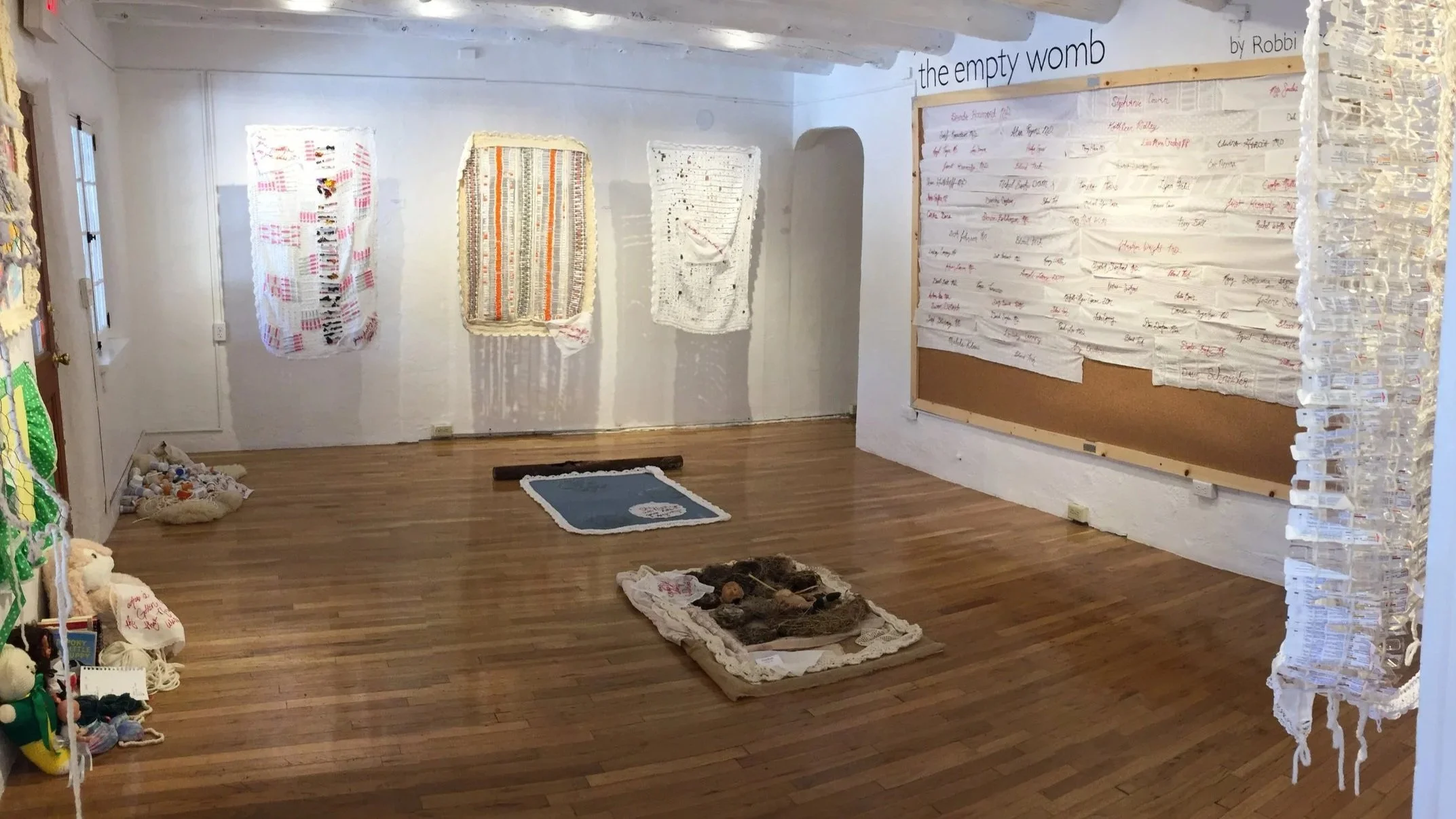
The Baby Blankets
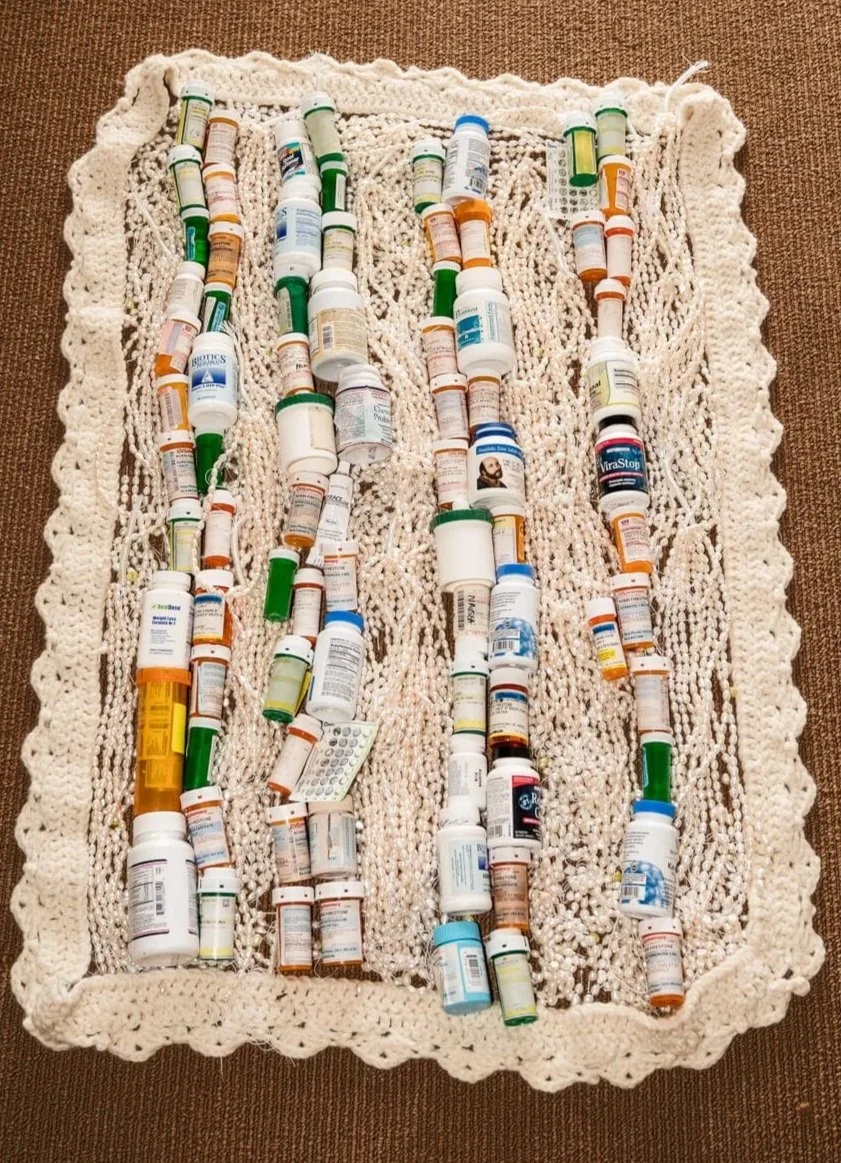
The Baby Blankets are a series of nine intimate textile works made at the standard size of a traditional, store-bought crib blanket—approximately 30 × 40 inches—yet intentionally constructed to stretch, give, and change over time, mirroring the way a child’s body grows. Rather than soft fabrics meant to comfort an infant, these blankets are built from medical supplies that were once closest to, and inside, my body during in vitro fertilization. Where a baby might have been swaddled, my body was instead assaulted by medicine—by injections, pills, and interventions that brought violent hormonal shifts, mood disruptions, pain, and loss of bodily autonomy. The care typically offered to a tender child was replaced by endurance and survival. These works hold that substitution without sentimentality: growth without a child, treatment without tenderness, and a body altered not by nurturing life, but by the brutal effort of trying to create one.



The Welders Screens
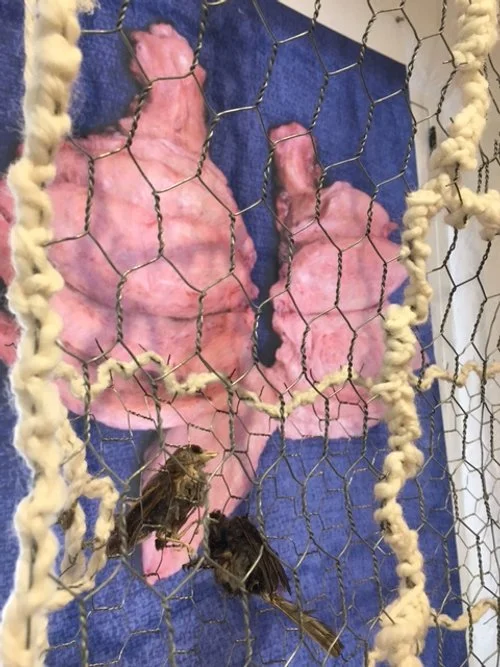
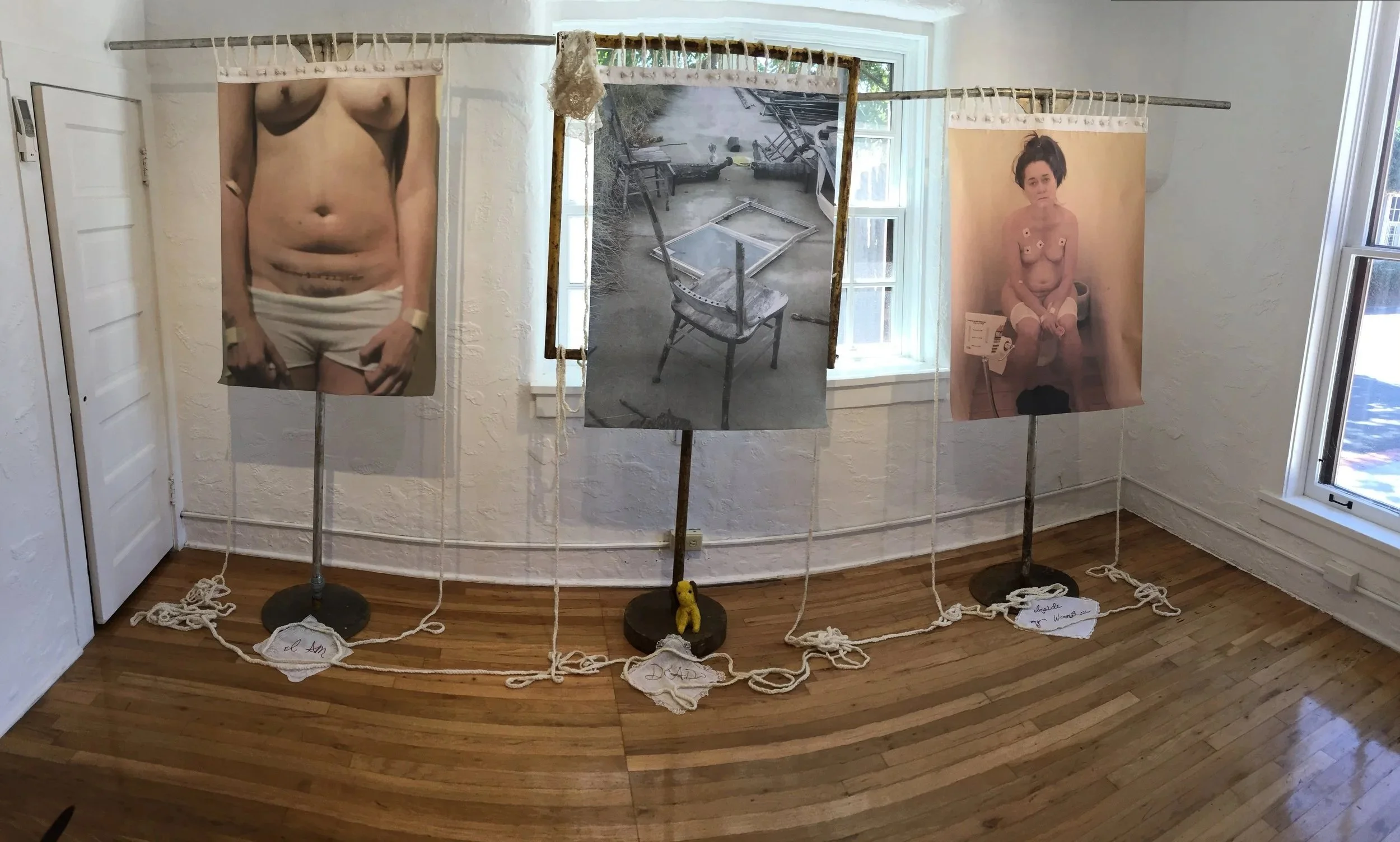
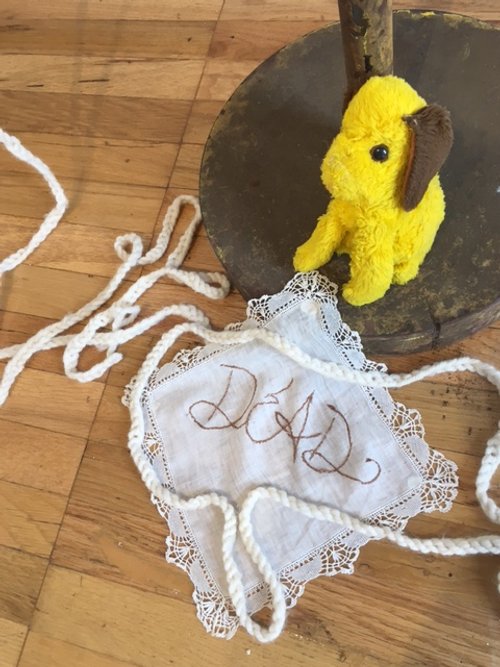
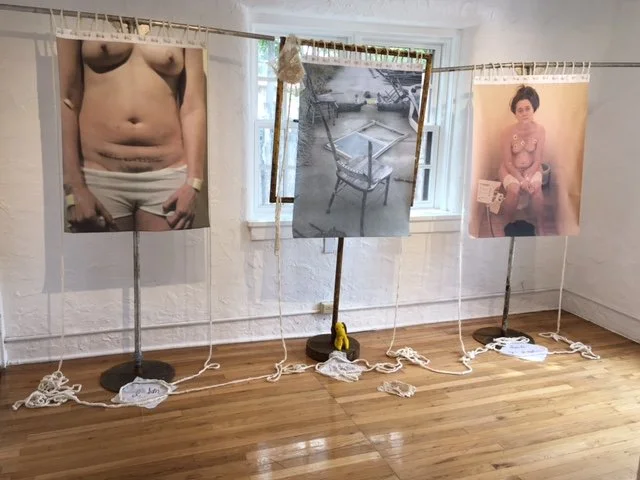
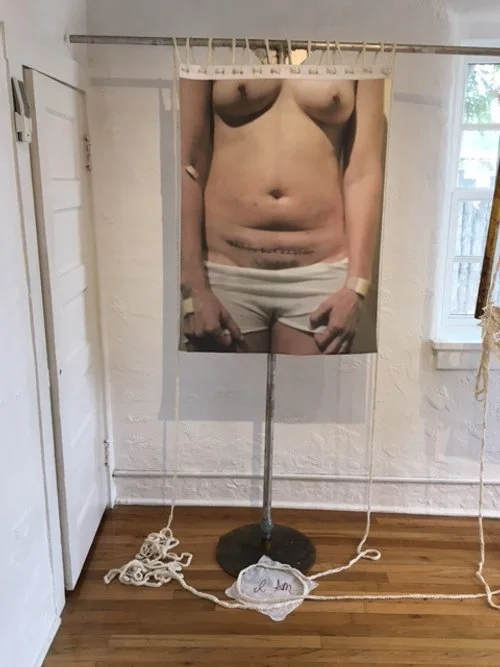
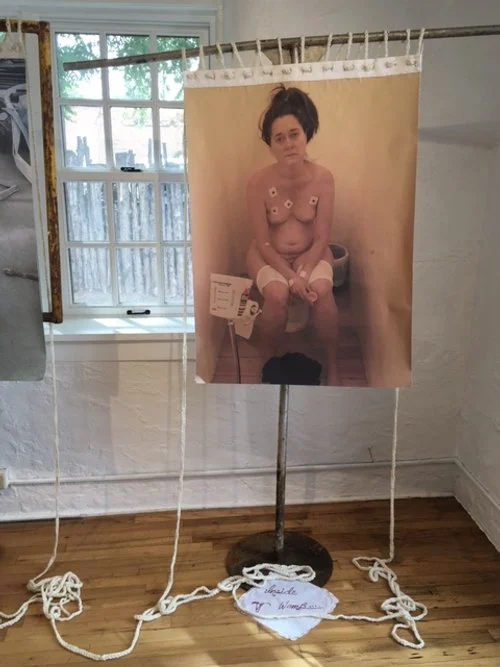
The Welders Screens is a standing triptych that confronts the collapse of “home” as both body and lineage. Created after an emergency hysterectomy, the work holds the moment when the womb, once imagined as a future site of continuity, belonging, and inheritance, becomes irrevocably absent. The screens function as both barrier and witness, evoking industrial protection while exposing what cannot be shielded.
The three steel frames reference the Holy Trinity, rooted in the artist’s Catholic upbringing and a lifetime of prayer to the Father, the Son, and the Holy Ghost for a child. Their industrial material stands in deliberate contrast to the wood of the cross, which signifies the Son of God and the belief in life created through the touching of flesh. The steel instead evokes industrialized medical reproduction, engineered intervention, and clinical control. In this shift, spiritual belief gives way to statistical silence. Prayer is replaced by protocols, probabilities, and outcome charts, while in vitro fertilization rarely discloses how infrequently the process results in a living child. What was once sustained through faith becomes mediated by numbers, revealing a system in which loss is normalized, managed, and largely unnamed.
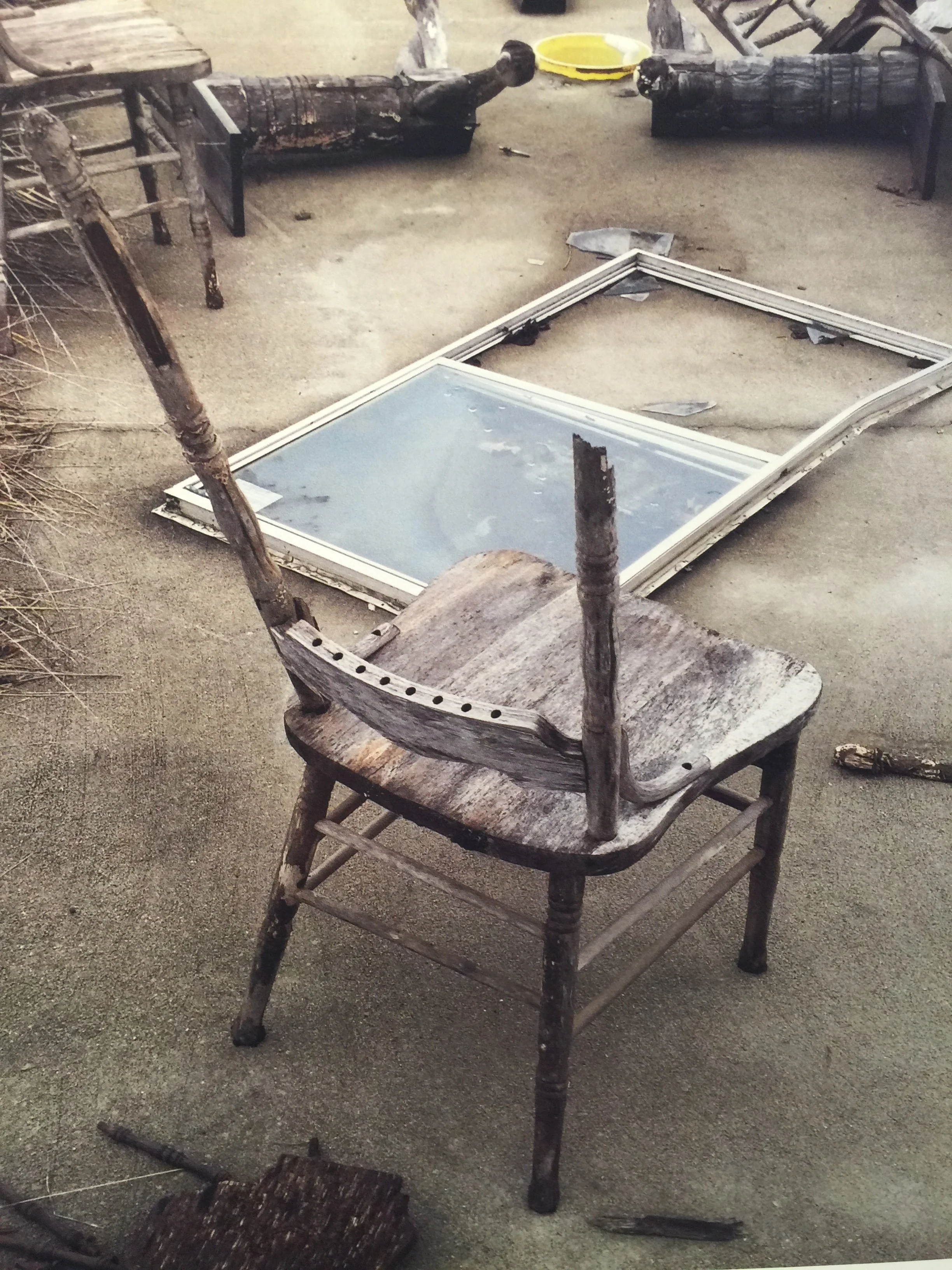
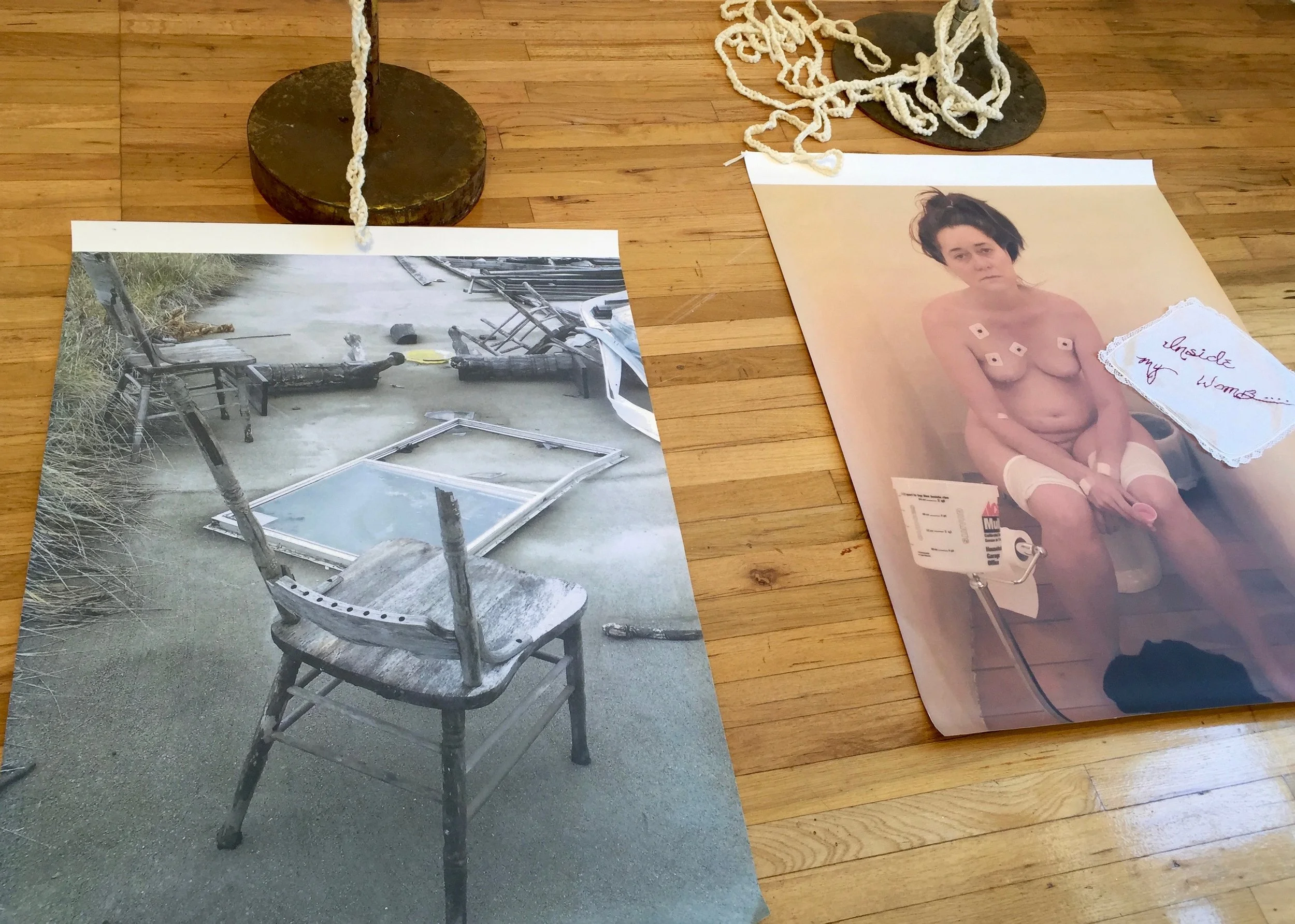
Funeral Chairs



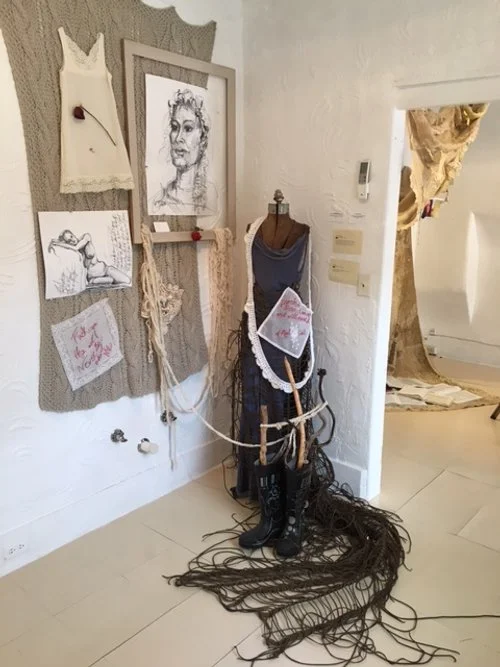
The Innocent Lamb
work in progress
The Rosary
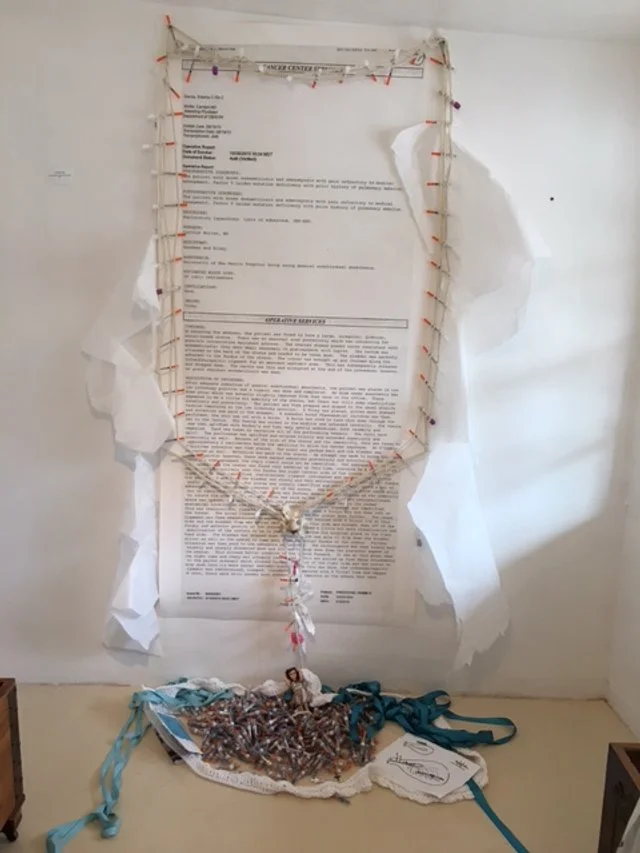
work in progress